Yes, matcha does have caffeine. A standard cup made with about 2 grams of powder (roughly 1 teaspoon) contains around 38–88 mg of caffeine. That’s in the same ballpark as a regular cup of coffee, but the way your body processes it is quite different.
Below we’ll break down the numbers, explain why matcha caffeine feels different to coffee, and help you figure out which one works better for you.
How Much Caffeine Is in Matcha?
One gram of matcha powder has about 19–44 mg of caffeine. Most people use around 2 grams per cup, so you’re looking at roughly 38–88 mg per serve.
That’s a wide range, and it depends on a few things:
- The grade. Ceremonial grade matcha is made from younger, shade-grown leaves and tends to have more caffeine.
- How much you use. A light matcha uses 1 gram. A strong latte might use 4 grams. More powder means more caffeine.
- You’re eating the whole leaf. Unlike regular tea where you steep leaves and throw them out, matcha is the ground-up leaf itself. So you get a much more concentrated hit of caffeine (and everything else in the leaf).
Caffeine in Matcha vs Coffee (and Other Drinks)
Here’s how matcha stacks up against other caffeinated drinks:
| Drink | Typical Serve | Caffeine |
|---|---|---|
| Matcha (1 tsp) | 60–120 mL | 38–88 mg |
| Filter coffee | 240 mL | 80–100 mg |
| Espresso (single) | 30 mL | 63–100 mg |
| Black tea | 240 mL | 25–50 mg |
| Green tea | 240 mL | 20–30 mg |
| Cola (can) | 375 mL | 30–40 mg |
The short version: gram for gram, matcha actually has more caffeine than coffee. But because you use less powder per serve, a cup of matcha usually has slightly less caffeine than a cup of filter coffee. A strong matcha latte with 2 teaspoons can match or beat a coffee though.
Does Matcha Have More Caffeine Than Coffee?
It depends on how you measure it. Per gram of powder, yes. Per cup, usually no (coffee tends to win because you use more ground coffee per serve). But the caffeine content isn’t really the interesting part of this comparison.
Why Matcha Caffeine Feels Different to Coffee
This is the bit that actually matters. Most people who drink matcha describe a calm, steady focus that lasts for hours. Coffee tends to hit fast and drop off fast. You get the spike, then the crash, then you reach for another cup.
The reason is an amino acid called L-theanine. Matcha is loaded with it because the tea plants are kept in shade before harvest, which ramps up amino acid production. Here’s what L-theanine does:
- Slows down caffeine absorption. Instead of one big hit, the caffeine enters your system gradually over a few hours.
- Promotes calm focus. L-theanine boosts alpha brain waves, which are linked to that relaxed-but-alert state you get during deep focus or meditation.
- No jitters. The calming effect takes the edge off the caffeine. You feel awake without feeling wired.
- No crash. Because the caffeine releases slowly, there’s no sudden energy drop. Most people find matcha keeps them going for 4–6 hours vs 1–3 for coffee.
This is why Buddhist monks have been drinking matcha for centuries during meditation. Alert mind, calm body.
Matcha vs Green Tea: Is There a Difference?
A big one. Regular green tea is made by steeping leaves in water, then you throw the leaves away. With matcha, you’re drinking the actual leaf ground into powder. That means matcha delivers roughly two to three times the caffeine of a regular green tea, plus a lot more antioxidants and L-theanine.
When to Pick Matcha Over Coffee
- You need steady focus for a few hours (studying, deep work, long meetings).
- Coffee makes you jittery or anxious.
- You want an afternoon pick-me-up that won’t keep you up at night.
- You want the health benefits that come with antioxidants and L-theanine.
FAQs about Matcha having Caffeine
Does matcha have a lot of caffeine?
It has a moderate amount. A typical serve sits at 38–88 mg, which is similar to coffee. It’s definitely more than regular green tea or black tea.
Does a matcha latte have caffeine?
Yes. Adding milk doesn’t remove the caffeine. A matcha latte has the same caffeine as a straight matcha, just diluted with milk.
Will matcha keep me awake?
It can if you drink it late in the day. Because of L-theanine, most people find it less disruptive to sleep than coffee. As a rule of thumb, avoid it within 4–6 hours of bedtime.
Can I drink matcha every day?
Yes. One to two cups a day keeps you well under the 400 mg daily caffeine limit recommended for healthy adults. Plenty of people drink matcha daily as their main caffeine source.
Is matcha less addictive than coffee?
Generally, yes. Because the caffeine is absorbed more slowly, your body doesn’t build the same dependency. People who switch from coffee to matcha often report fewer withdrawal symptoms if they miss a day.
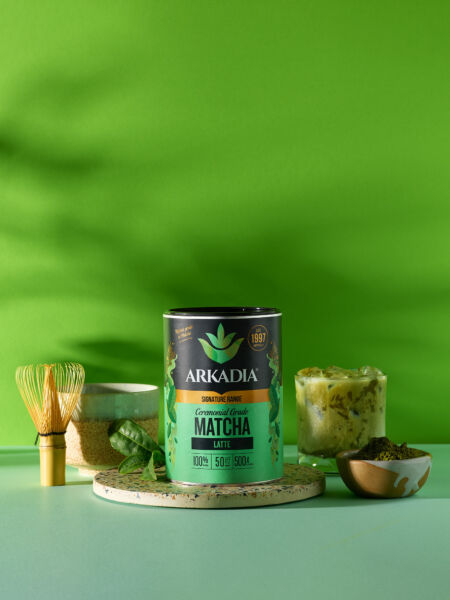
If you want to try matcha, start simple. A matcha latte blend is the easiest entry point since it’s smooth and not too intense. Once you’re comfortable, try a pure matcha for a bolder flavour. Shop the Arkadia Matcha Collection.


